
The Temperature Rise Challenge in Northern Illinois
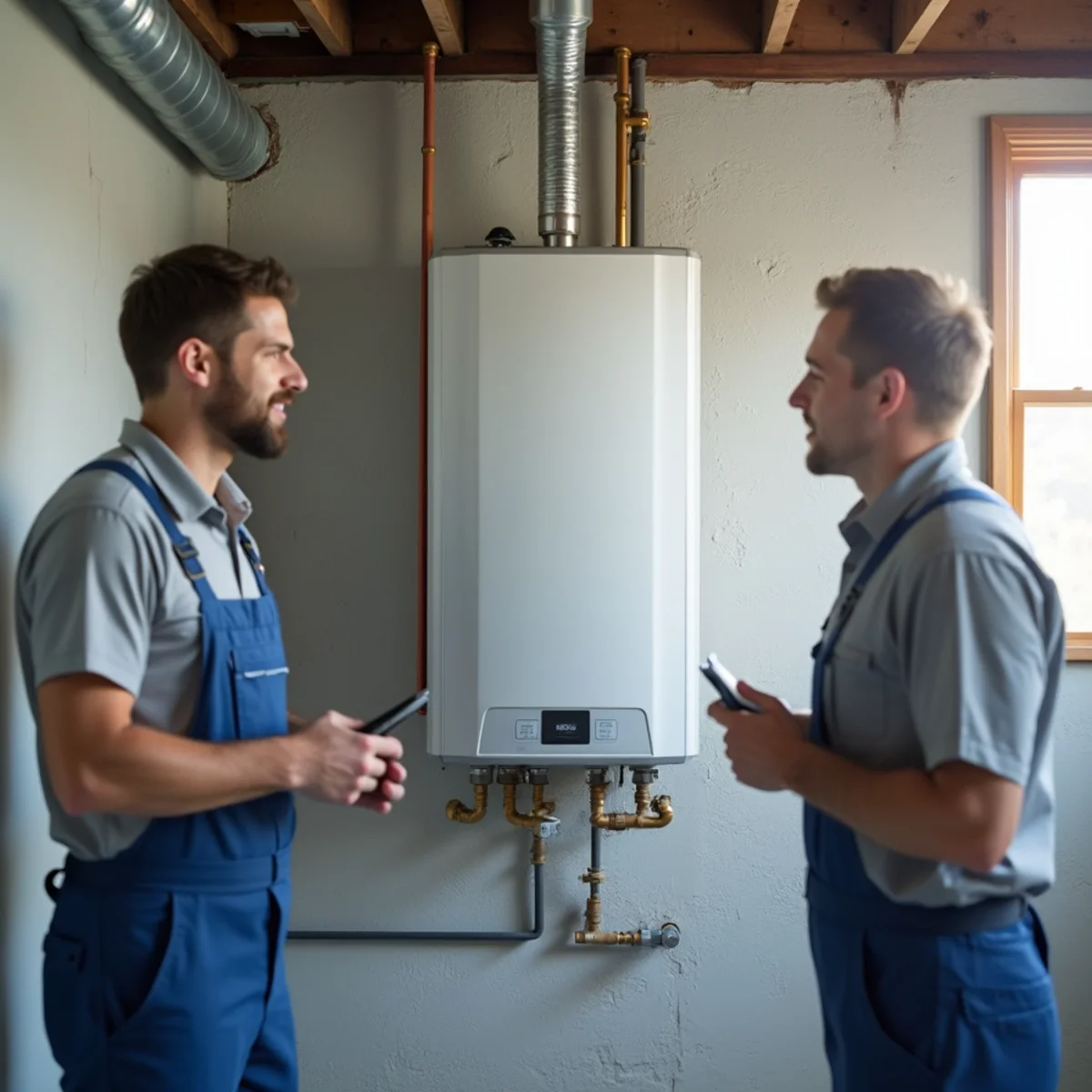
Tankless water heaters deliver endless on-demand hot water while freeing up valuable basement floor space. However, installing tankless equipment in the Chicago area requires precise engineering calculations that southern states never face.
In mid-winter, municipal water drawn from Lake Michigan enters your home at approximately 38°F to 40°F. To achieve a comfortable 120°F shower temperature, the tankless heater must produce an extraordinary 80°F to 82°F temperature rise. A unit rated for 9 GPM in Florida may only produce 4.5 GPM in a Wilmette January if undersized.
Gas Supply Infrastructure: The 1/2" vs 3/4" Reality
A standard 50-gallon atmospheric tank water heater consumes around 40,000 BTUs of natural gas. In contrast, a high-output whole-home tankless unit (such as a Navien NPE-240A2) demands up to 199,000 BTUs when running multiple showers simultaneously.
In older North Shore homes, original gas supply lines are frequently only 1/2-inch in diameter. Running a 199k BTU appliance requires verifying gas meter capacity and often running a dedicated 3/4-inch or 1-inch gas line from the meter manifold to prevent starvation of your furnace or stove.
Need immediate help in Wilmette or nearby North Shore?
Direct-Vent Exhaust Requirements in Pre-War Basements
Traditional water heaters exhaust flue gases upward through a masonry chimney by natural draft. High-efficiency condensing tankless units operate at lower exhaust temperatures, producing acidic moisture that will quickly destroy mortar in an unlined brick chimney.
Consequently, condensing tankless heaters must be direct-vented through the rim joist to the outdoors using specialized Schedule 40 PVC or polypropylene piping. Linden Plumbers evaluates exterior clearance codes (windows, gas meters, walkways) before recommending installation.
When Does Tankless Make Sense Over a Traditional Tank?
Tankless is an ideal upgrade for households with high consecutive hot water demands (large families, luxury multi-head showers, soaking tubs) and homeowners seeking a 20+ year lifespan. For smaller households or homes with restrictive venting pathways, premium power-vent 50-gallon tanks remain an exceptional, cost-effective choice.
Gas Supply Sizing, Combustion Venting, and Hard Water Descaling
Converting from a traditional 40,000 BTU atmospheric storage tank to a 199,000 BTU whole-home tankless water heater in Wilmette requires careful utility evaluation. During cold winters when Lake Michigan water temperatures drop to 38°F, a tankless unit requires massive instantaneous energy input to deliver 120°F hot water. The existing 1/2-inch gas supply line typically must be upgraded to a dedicated 3/4-inch or 1-inch line directly from the gas meter.
Furthermore, high-efficiency condensing tankless units produce acidic exhaust moisture and require specialized concentric PVC or polypropylene venting through exterior rim joists. In hard North Shore water (approx. 8 grains per gallon), annual descaling with a non-toxic citrus or vinegar flush is mandatory to prevent calcium carbonate scale from choking the heat exchanger.
Venting Requirements and Condensate Disposal for High-Efficiency Units
When upgrading to a high-efficiency tankless water heater in older North Shore homes, proper combustion air intake and exhaust venting require careful engineering. Condensing tankless models achieve 95%+ thermal efficiency by extracting heat from exhaust gases, resulting in cooler flue gas temperatures that cannot be vented through standard masonry chimneys or metal B-vent stacks without causing corrosive acid condensation that damages masonry mortar.
Instead, high-efficiency tankless systems require dedicated dual-pipe concentric direct venting constructed from specialized Category IV polypropylene or solid-core PVC routed horizontally through an exterior rim joist or roof penetration. Additionally, because the condensing process produces acidic wastewater, local plumbing codes mandate the installation of an inline limestone condensate neutralizer before the drainage line connects to your home sewer system. Our technicians handle all venting calculations and code compliance to ensure safe, flawless operation.
Annual Maintenance and Scale Prevention for North Shore Water Quality
Lake Michigan municipal water provides excellent purity but contains moderate dissolved calcium and magnesium minerals that precipitate out of solution when heated above 135 degrees Fahrenheit. In high-efficiency tankless water heaters, this thermal precipitation creates a thin layer of mineral scale inside the copper or stainless-steel primary heat exchanger.
To preserve optimal thermal transfer and protect your manufacturer warranty, tankless units require an annual descaling flush using a recirculating pump and food-grade virgin white vinegar or specialized citric acid solution. Linden Plumbers provides routine annual maintenance packages that include descaling, intake air filter cleaning, flame sensor polishing, and digital combustion analysis.