
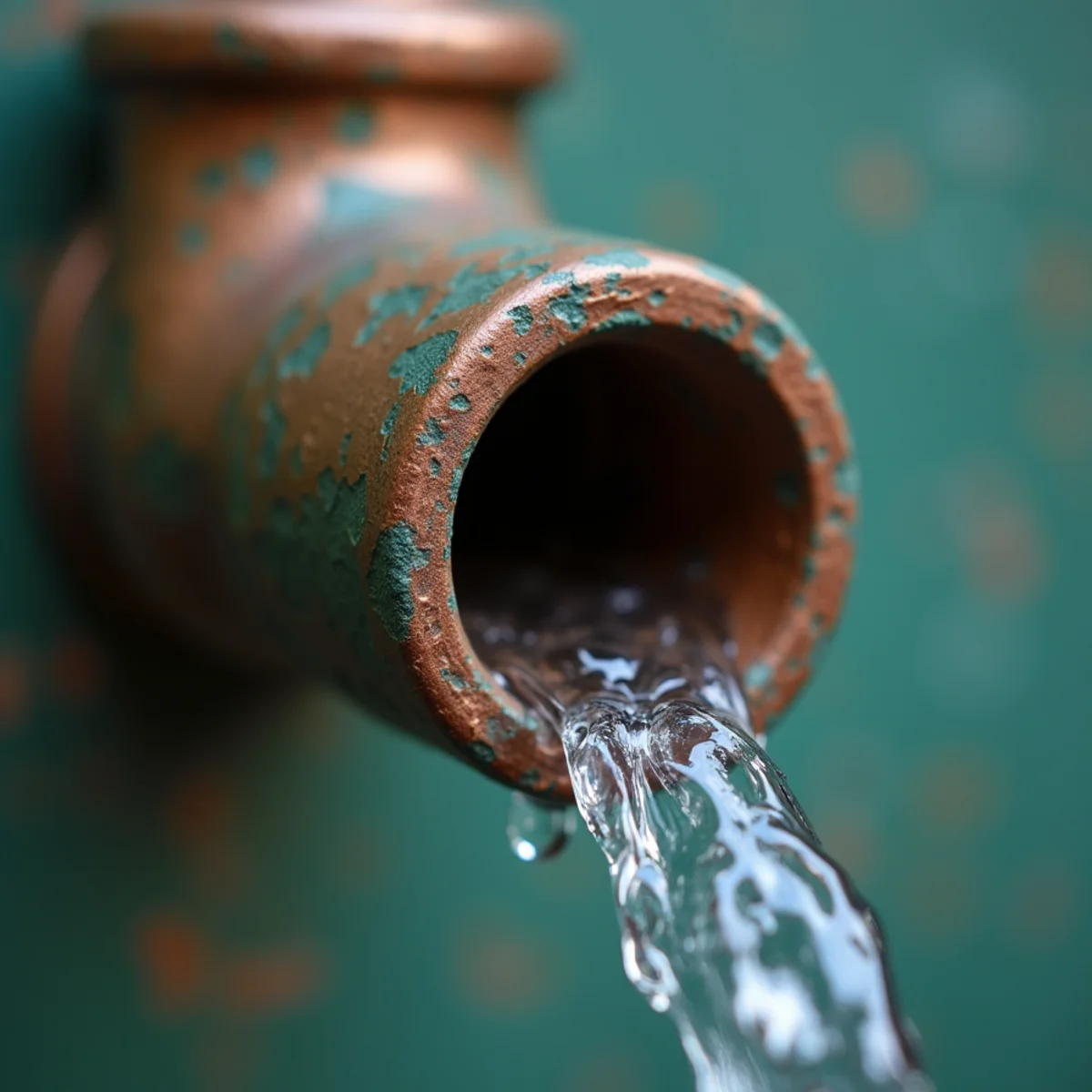
The Anatomy of a Pinhole Leak
Few plumbing failures are as frustrating as the mysterious pinhole leak: a microscopic puncture in a copper water pipe that releases a fine, needle-like spray inside a finished wall or ceiling. By the time damp drywall, peeling paint, or mold appears, water has often been saturating insulation and wood studs for weeks.
While copper has been the gold standard of residential water delivery for over 70 years, aging copper systems (particularly thin-wall Type M copper installed in 1960s and 1970s homes) are increasingly suffering from internal pitting corrosion.
What Causes Pitting Corrosion in Copper Pipes?
Copper pitting is an electrochemical phenomenon driven by several factors: 1. Water Chemistry: Municipal dissolved oxygen, chlorine disinfectants, and subtle pH variations gradually erode the protective internal copper oxide patina. 2. Hydraulic Velocity: Excessive municipal water pressure (above 80 PSI) or undersized supply lines create turbulent flow that scours the interior pipe wall at elbows and tees. 3. Stray Electrical Currents: In older homes where household electrical panels were grounded directly to copper water lines, stray DC/AC currents accelerate galvanic metal loss.
Need immediate help in Wilmette or nearby North Shore?
Galvanized Steel Pipes: Corrosion from the Inside Out
In pre-1950 Wilmette homes, galvanized iron pipe was standard. Unlike copper, which develops localized pinholes, galvanized pipe corrodes along its entire interior circumference.
Over 60 to 90 years, iron oxide (rust) tuberculates inside the pipe, shrinking a 3/4-inch supply line down to the diameter of a straw. Common symptoms include rust-tinted water when turning on morning taps, dramatic pressure drops when someone flushes a toilet, and sudden catastrophic fitting ruptures.
Spot Repair vs. Whole-Home Repipe: Making the Smart Decision
When you discover your first pinhole leak, a targeted spot repair—cutting out the failed section and sweating in sound Type L copper or coupling with PEX—is the logical, economical choice ($280 – $650).
However, if your home has experienced two or more pinhole leaks within 12 months, your entire pipe network has reached the end of its structural lifespan. Continuing to patch individual leaks is a losing game that invites repeated drywall demolition and insurance claims. A whole-home repipe using Uponor PEX-a provides clean drinking water, high pressure, and 100% peace of mind.
Modern Whole-Home Repiping: Type L Copper vs. Expansion PEX-a
When recurring pinhole leaks or severe internal corrosion render spot repairs uneconomical, homeowners must choose a replacement piping material. For over six decades, rigid Type L copper has been the gold standard in North Shore homes, offering exceptional durability, natural antimicrobial properties, and high structural rigidity.
However, modern repiping frequently utilizes Uponor PEX-a (cross-linked polyethylene) expansion piping. PEX-a expands up to three times its diameter if frozen without splitting, resists aggressive water chemistry, and allows continuous flexible runs from a central manifold to each fixture. This eliminates in-wall tee fittings and elbows, reducing potential leak points by over 70% and minimizing wall disruption in historic plaster interiors.
Electrochemical Dissimilar Metal Corrosion and Dielectric Union Inspection
A hidden driver of accelerated pipe failure in older North Shore residences is galvanic corrosion resulting from direct contact between dissimilar metals. In homes that underwent partial remodeling between 1970 and 1990, plumbers occasionally connected modern copper water lines directly to older galvanized steel distribution pipes without installing proper dielectric insulating unions. Because copper and zinc-coated steel possess different electrochemical potentials, an electrical micro-current flows between the metals when immersed in conductive municipal water.
This galvanic cell causes rapid sacrificial corrosion of the galvanized steel threads, resulting in severe internal rust nodules that choke water flow and trigger sudden joint blowouts. During every home diagnostic visit, Linden Plumbers inspects water meter connections, water heater inlet and outlet nipples, and transitional plumbing junctions for signs of galvanic oxidation. Replacing compromised transition fittings with brass transition couplings or converting older piping to modern expansion PEX-a permanently halts galvanic degradation and secures your home water supply.