The Great Debate: Mechanical Blades vs. High-Pressure Water
When a main sewer line backs up into a Wilmette basement, homeowners are faced with two primary cleaning technologies: mechanical power rodding (snaking) or high-pressure hydro jetting. Both methods clear clogs, but their mechanics, outcomes, and safety profiles differ dramatically—especially in vintage vitrified clay sewer laterals.
How Power Rodding Works on Heavy Root Masses
Power rodding utilizes stiff, sectional spring-steel cables driven by an electric motor. Technicians attach hardened steel C-cutters or saw blades sized to match the interior diameter of the pipe.
As the cable spins, the blades shear through tough tree roots and puncture solid blockages. Rodding is the gold standard for heavy root penetration because physical steel blades can slice woody roots that high-pressure water streams cannot always sever. However, rodding only cuts a circular hole through the blockage; it leaves grease, soap scum, and scale clinging to pipe walls.
Need immediate help in Wilmette or nearby North Shore?
How Hydro Jetting Restores Pipes to Like-New Condition
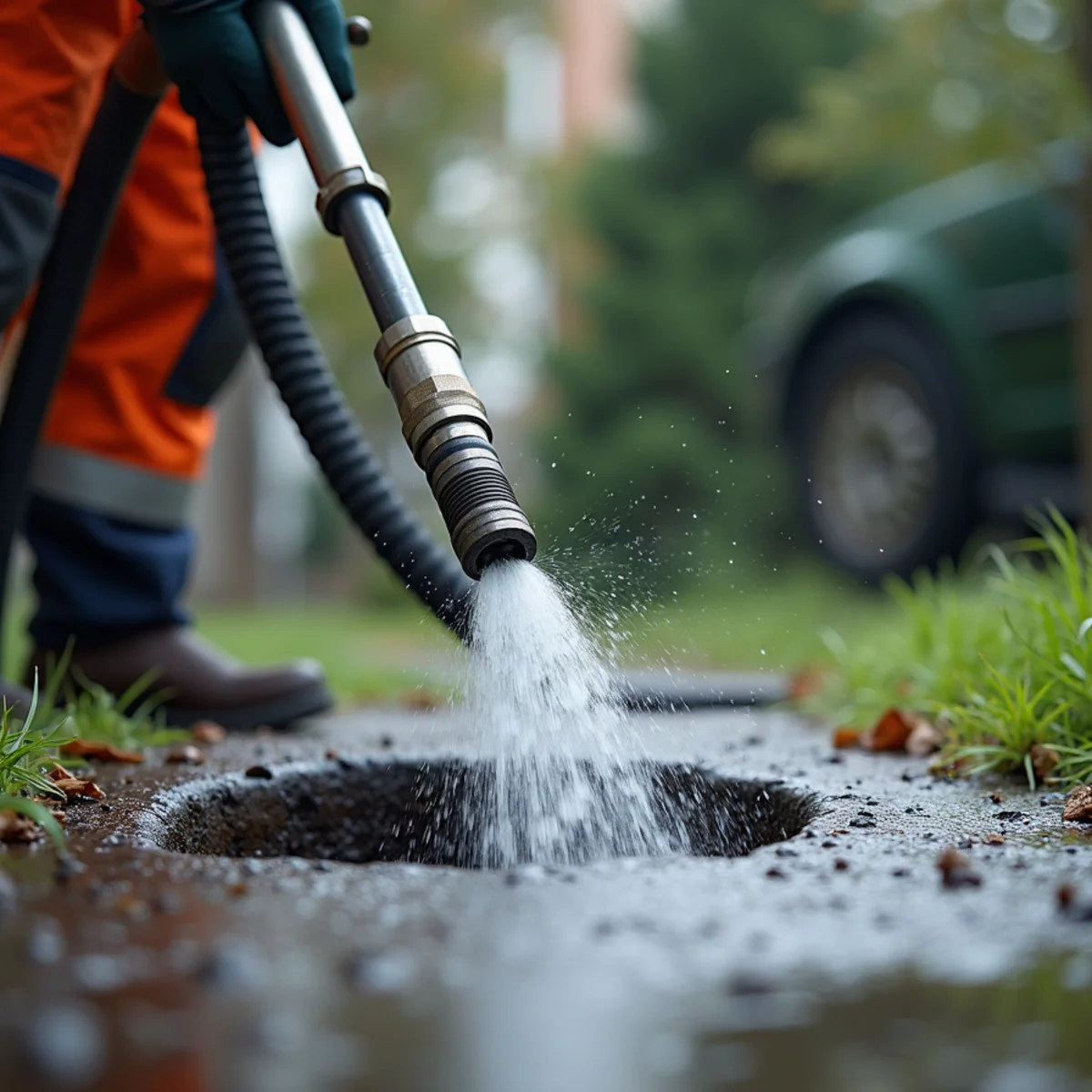
Hydro jetting operates like a commercial pressure washer for underground plumbing. Specialized nozzles mounted on high-pressure hoses blast water at up to 4,000 PSI in 360-degree forward and reverse patterns.
The reverse jets propel the hose down the line while scouring encrusted grease, calcified scale, and fine root hair completely off the pipe sidewalls. Hydro jetting flushes the entire debris mass out to the municipal street main, restoring full hydraulic carrying capacity.
Is Hydro Jetting Safe for Historic Clay Tile Pipes?
Yes—WITH ONE CRUCIAL REQUIREMENT: a high-definition video camera inspection must be performed before jetting. If a clay tile sewer line is structurally intact with sound walls and minor root intrusion, hydro jetting is completely safe and vastly superior to mechanical snaking.
However, if the clay pipe has already suffered shear cracks, collapsed crowns, or severe offset joints where pipe sections have dropped into the surrounding soil, 4,000 PSI water can wash away supporting soil or collapse the damaged section. At Linden Plumbers, we always camera-inspect older lines before applying hydro jetting.
Nozzle Selection, Operating Pressures, and Camera Pre-Inspection
Commercial hydro jetting requires specialized engineering knowledge when applied to vintage clay sewer laterals. Our technicians utilize jetting machines delivering 3,500 to 4,000 PSI at 8 to 12 gallons per minute, but the pressure is carefully regulated to match the pipe's physical condition.
We select from an array of specialized German-engineered nozzles: forward-penetrating nozzles to bore through solid blockages, rotating root-cutting chain flails to scour pipe perimeters, and rear-propulsion nozzles that drag the hose down the lateral while flushing debris backward to the cleanout. A video camera inspection is performed immediately before and after jetting to ensure mortar joints remain undamaged and the pipe wall is completely clean.
Root Cutting Warheads and Grease Emulsification Pressure Ratings
The clinical effectiveness of commercial hydro-jetting depends on selecting the precise operating pressure and nozzle configuration suited to the age and material of the sewer pipe. While mechanical rodding simply pokes a temporary hole through the center of an obstruction, hydro-jetting utilizes precision-engineered stainless steel nozzles that discharge high-velocity water jets at pressures ranging from 3,500 to 4,000 PSI with flow rates of 12 to 18 gallons per minute.
For stubborn tree root intrusions in vitrified clay tile laterals, our technicians deploy rotating root-cutter warhead nozzles that spin at thousands of revolutions per minute, utilizing hardened stainless-steel water jets to shear roots flush with the inner pipe circumference. For commercial kitchens or residential laterals choked with congealed fats, oils, and grease (FOG), specialized 360-degree degreasing nozzles emulsify and liquify stubborn grease buildup, thoroughly scrubbing pipe walls back to their original diameter and restoring optimal hydraulic flow.
Post-Cleaning Camera Verification and Maintenance Warranty
The defining hallmark of professional sewer restoration is full visual verification following the cleaning process. After high-pressure hydro jetting scours the clay lateral clean of all grease, scale, and root intrusions, our technician runs a self-leveling fiber-optic inspection camera through the entire pipe run to the city main.
This post-cleaning camera pass verifies that 100% of the pipe diameter is restored and allows us to inspect previously hidden pipe joints for structural integrity, offset hubs, or longitudinal fractures. At Linden Plumbers, we archive this video recording for the homeowner and provide an unconditional flow warranty on all fully hydro-jetted residential sewer lines.