
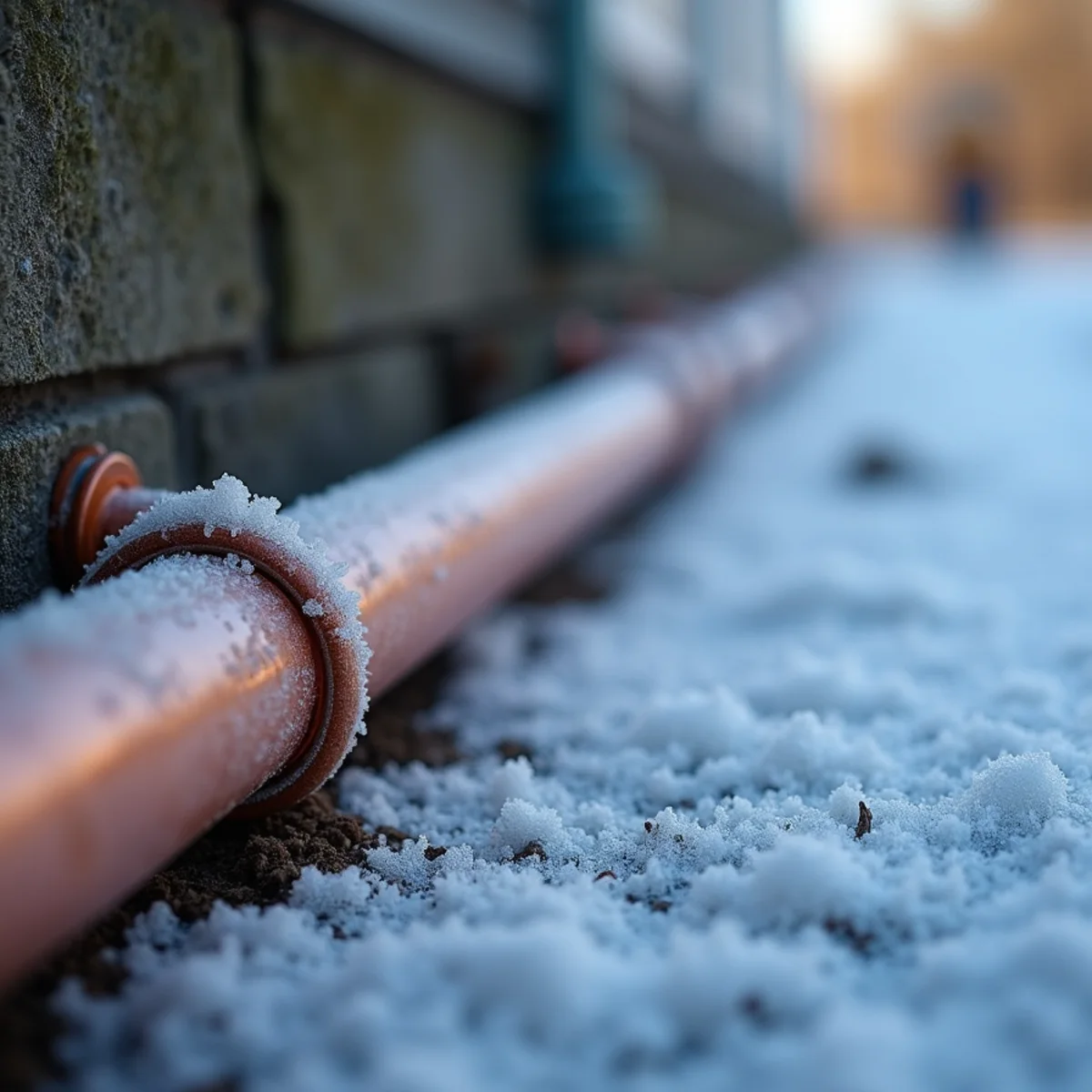
Step 1: Shut Off the Main Water Supply Immediately
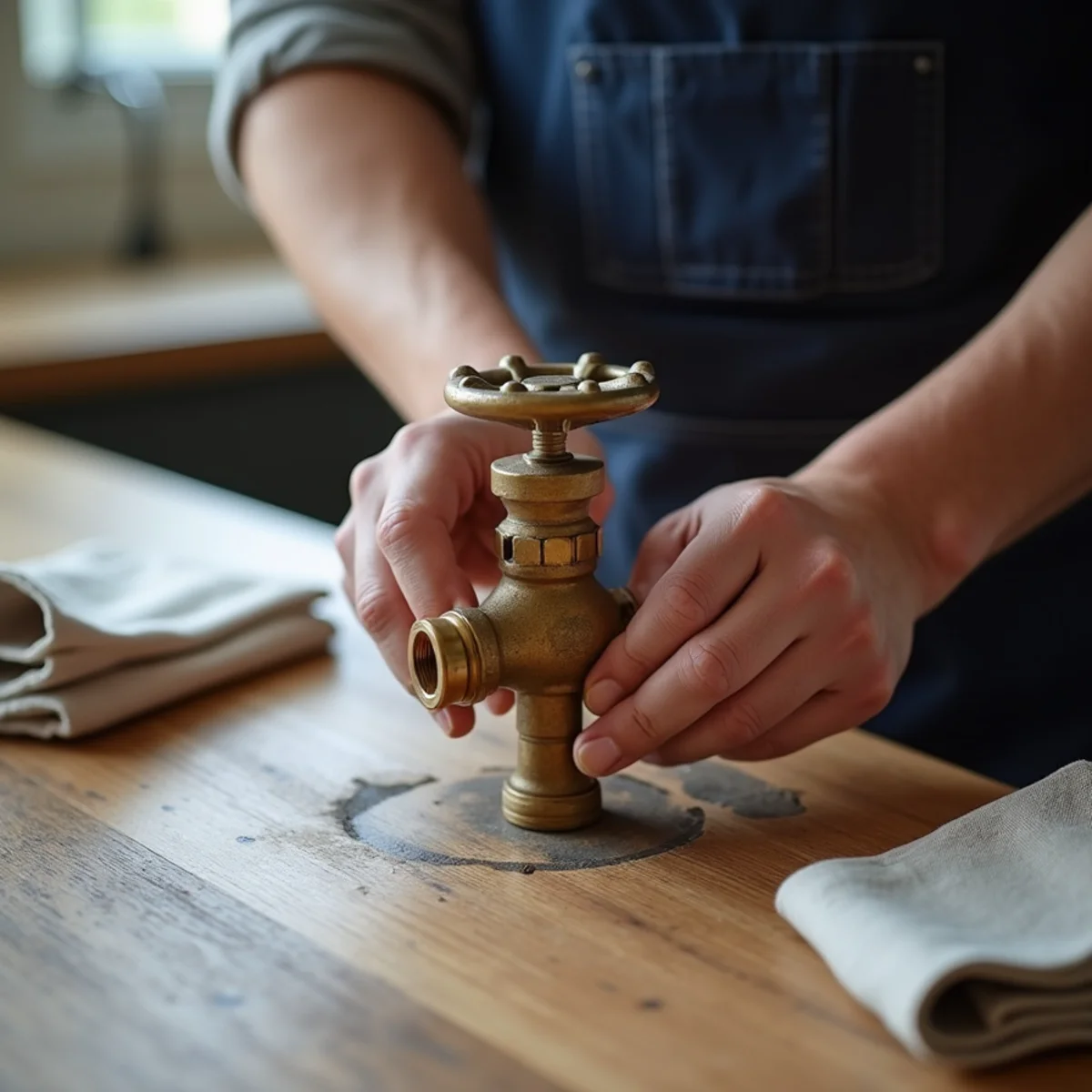
If water is actively spraying or leaking from a burst pipe, locate your home's main water shut-off valve immediately. In most Wilmette and North Shore residences, this valve is situated in the basement along the front foundation wall, right where the municipal water service enters near the water meter.
Turn the valve handle clockwise (if it's a round gate valve wheel) or perpendicular to the pipe (if it's a modern brass quarter-turn ball valve). If the valve is seized or calcified, locate the street buffalo box curb shut-off or call our 24/7 emergency dispatch at (858) 363-8298 for priority assistance.
Step 2: Relieve Pressure Across the System
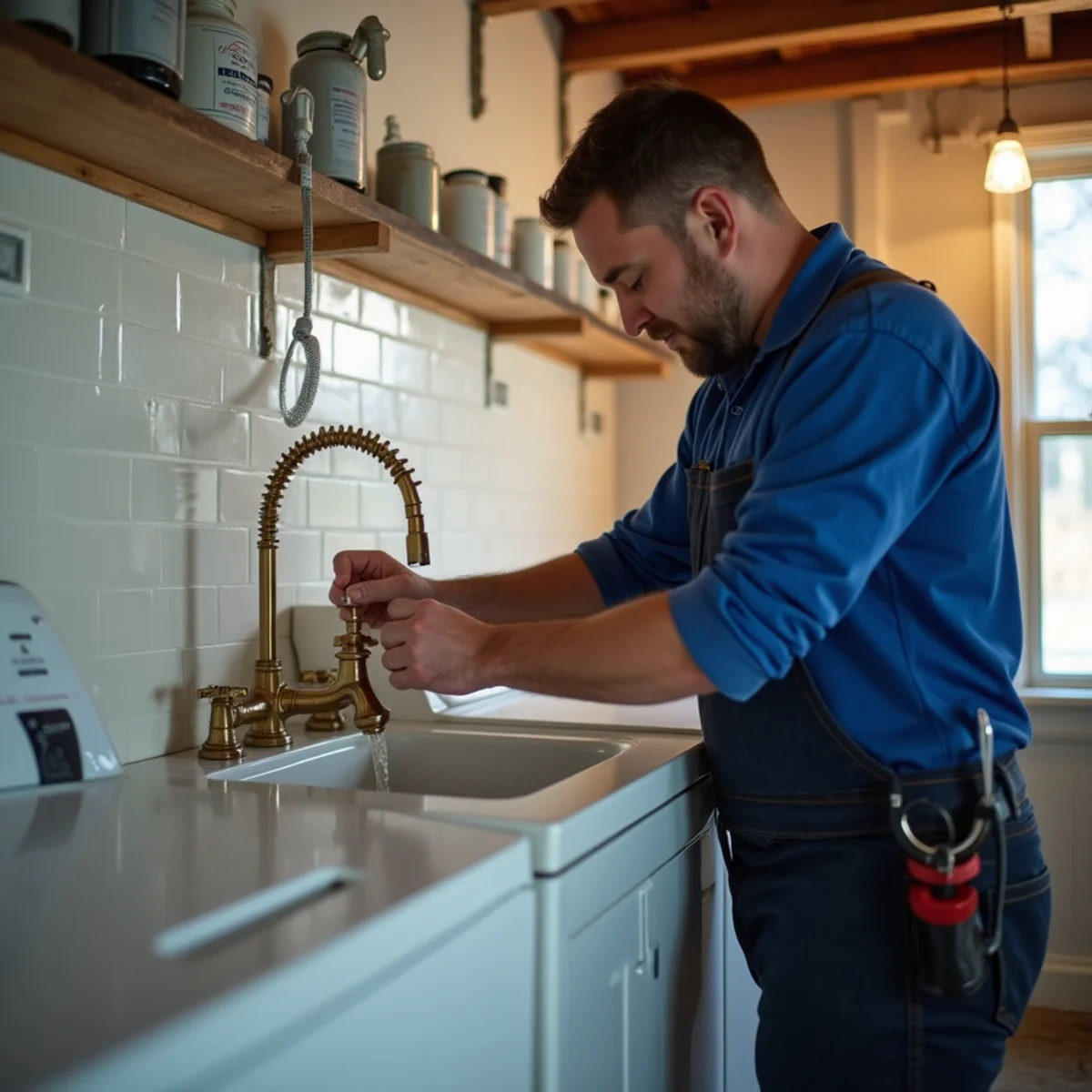
After closing the main shut-off valve, open all faucets connected to the affected line, starting with the lowest fixture in your home (such as a basement laundry sink) and moving to the top floor. This relieves built-up hydraulic pressure inside the piping network.
When water freezes inside a pipe, it expands by approximately 9% in volume. Surprisingly, pipes rarely burst at the exact point of the ice blockage; instead, the ice plug acts like a piston, compressing the trapped water downstream until hydraulic pressure spikes to thousands of PSI, splitting the copper tubing.
Need immediate help in Wilmette or nearby North Shore?
Step 3: Safe Thawing Techniques (Never Use an Open Flame)
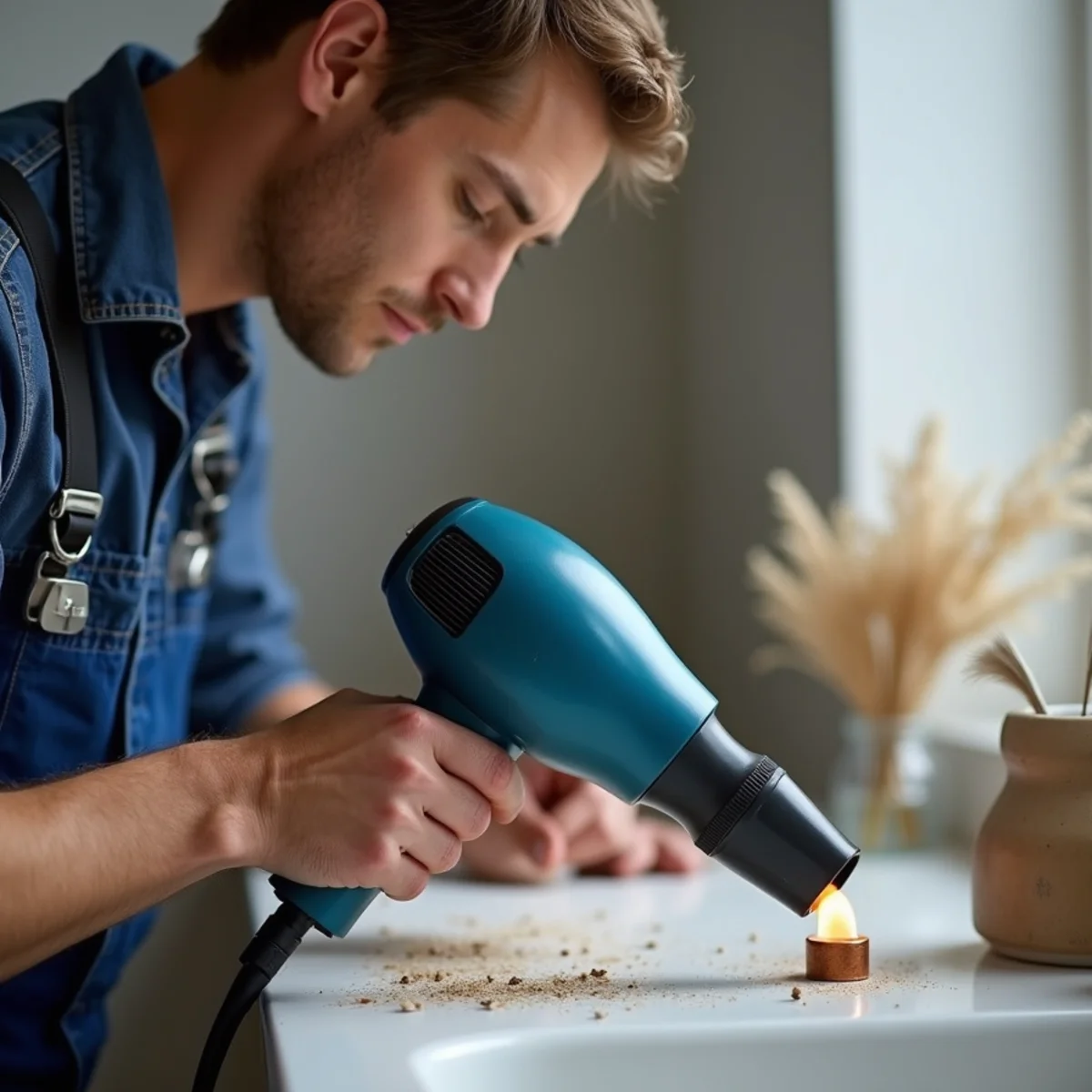
If a pipe is frozen but has not yet ruptured, you can attempt gentle thawing while waiting for the plumber. Open cabinet doors under sinks situated on exterior walls to allow warm household air to circulate.
You can apply gentle, controlled heat using a standard hair dryer, an electric heating pad wrapped around the pipe, or warm towels soaked in hot water. NEVER use a propane torch, heat gun, or open flame device. Open flames ignite dry wood framing inside wall cavities and can cause trapped steam to burst the pipe violently.
Long-Term Prevention for North Shore Winters
To prevent future winter freeze emergencies, inspect all plumbing running through unconditioned crawlspaces, cantilevers, and exterior rim joists. Seal air gaps with expanding closed-cell foam and install high-density polyethylene pipe insulation.
Furthermore, ensure all outdoor garden hoses are detached from exterior hose bibs before the first freeze in November. Leaving a hose connected traps water inside the sillcock barrel, guaranteeing a ruptured pipe when temperatures drop.
Professional Freeze Damage Assessment and Structural Repressurization
Thawing a frozen pipe is only half the battle. When water freezes into solid ice, it expands by approximately 9% in volume, exerting radial pressure exceeding 100,000 PSI against copper, galvanized, or PEX pipe walls. Frequently, the pipe splits along a longitudinal seam or fractures behind a wall elbow, but the leak remains temporarily sealed by the ice plug itself.
Before restoring full city water pressure to a thawed pipe, our technicians isolate the affected plumbing zone and perform a controlled compressed air pressure decay test. If the gauge drops, an undetected fracture exists within walls, floor joists, or crawlspaces. Finding this split before turning the water meter back on prevents catastrophic hidden flooding.
Preventive Freeze Protection: Heat Trace Cables and Thermal Imaging Audits
Once an active freeze emergency is stabilized, homeowners must eliminate the underlying structural vulnerabilities that permitted the freeze event to occur. In North Shore architectural styles featuring cantilevered second stories, recessed soffits, or plumbing runs through unheated crawlspaces, conventional fiberglass insulation alone often fails to stop drafts during severe subzero polar vortex conditions. Installing self-regulating electric heat trace cables directly along vulnerable copper or PEX supply lines provides an automated, thermostatically controlled thermal barrier that activates whenever pipe surface temperatures approach freezing.
Additionally, scheduling a winter thermal imaging audit allows our technicians to identify hidden drafts and voids in your home exterior envelope where bitter winter winds infiltrate stud bays. Combining high-density closed-cell spray foam air sealing around rim joists, installing heavy-duty polyethylene pipe jackets, and retrofitting frost-free quarter-turn sillcocks ensures your plumbing infrastructure remains fully operational through the harshest Chicago winter freezes.