The First 15 Minutes: Isolate Fixtures and Eliminate Hazards
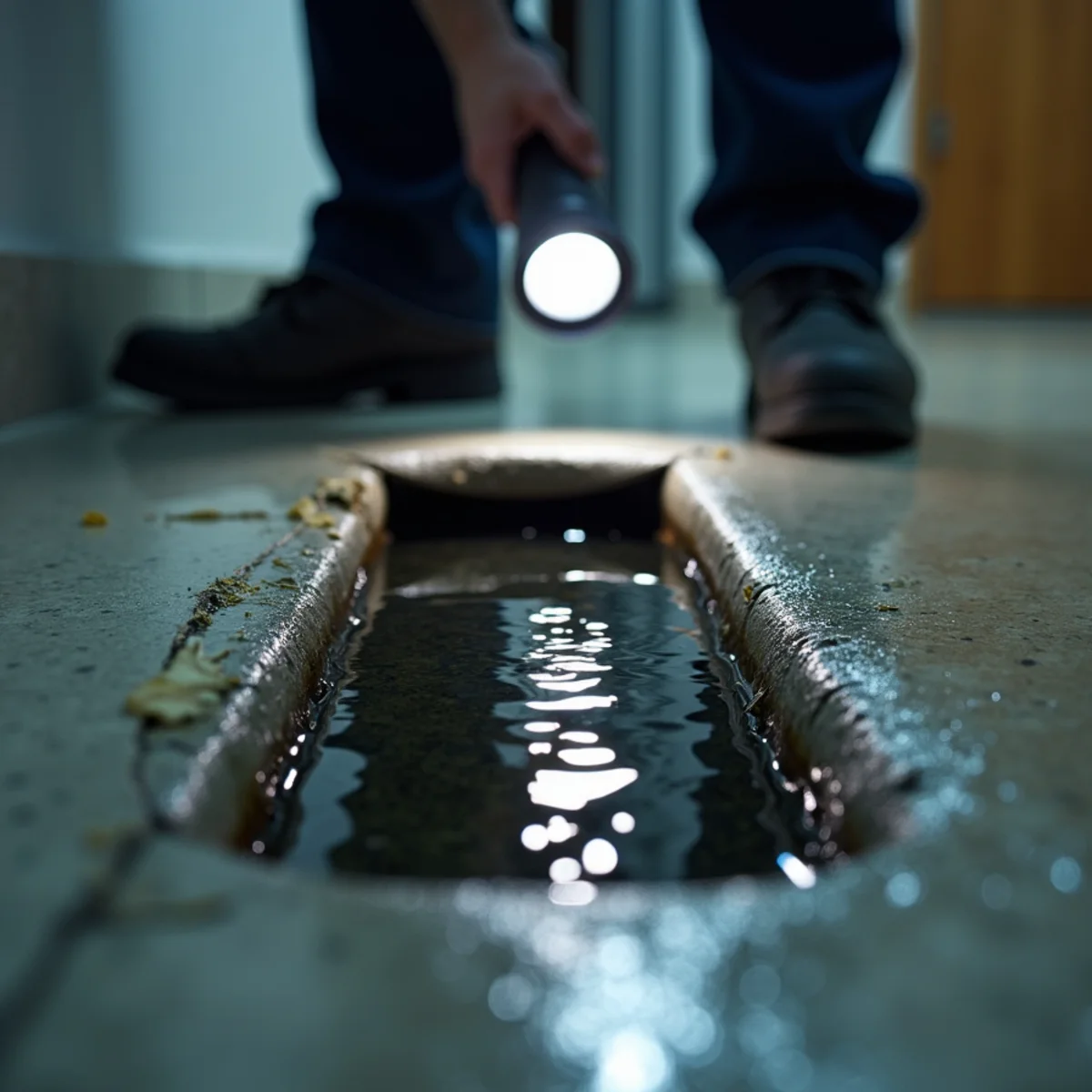
When wastewater backs up out of a basement floor drain, every second matters. The most critical immediate action is to stop adding water to your plumbing drainage network. Cease using all sinks, showers, dishwashers, washing machines, and toilets immediately throughout the entire house.
Because sewage is classified as Category 3 (black water) bio-hazard fluid containing harmful bacteria, viruses, and pathogens, keep children and household pets away from the basement. Furthermore, standing water poses an acute electrical shock hazard. If the water level is rising toward electrical outlets, extension cords, or your furnace and water heater, switch off the corresponding circuit breakers from a dry location or your main panel before stepping onto the floor.
Understanding the Cause: Municipal Surcharge vs. Private Lateral Blockage
A basement floor drain backup generally stems from one of two root causes: a blockage in your private sewer lateral, or a surcharge in the municipal street sewer main.
In older North Shore communities like Wilmette, Evanston, and Skokie, homes built before 1960 connect to the street via vitrified clay pipe laterals. Tree roots from mature oaks and maples infiltrate the mortar joints, catching toilet paper and solids until wastewater can no longer escape by gravity. When you run an upstairs shower, that volume has nowhere to go but out through your basement floor drain—the lowest gravity opening in your structure.
Conversely, during torrential summer cloudbursts, municipal combined sewers east of Ridge Road can become completely inundated with street runoff. The street sewer surcharges, pushing combined stormwater and municipal sewage backward up through private laterals into unprotected homes.
Need immediate help in Wilmette or nearby North Shore?
Documenting Damage for Insurance Before Cleanup
Before you or a professional mitigation crew begins disinfecting and extracting sewage, take clear, well-lit photographs and videos. Capture the water height along baseboards, affected appliances (water heaters, washers, dryers), stored personal contents, and the condition of the floor drain itself.
EPA guidelines emphasize that drying must begin within 24 to 48 hours to prevent severe toxic mold colonization behind drywall and under subfloors. Maintain separate invoices for plumbing rodding and structural water restoration to streamline your insurance claim.
Permanent Protection: Backwater Valves and Overhead Sewers
Relying on luck during the next storm is not a viable strategy. Homeowners who experience basement floor drain backups should evaluate structural flood prevention devices.
An automatic backwater valve installs directly into your main building drain, using a weighted mechanical flapper that allows home wastewater to flow outward but automatically seals shut when reverse pressure from a surcharged city sewer pushes back. For comprehensive protection, an overhead sewer conversion eliminates gravity floor drains entirely, pumping lower-level fixtures overhead so wastewater cannot back up even during a 100-year storm event.
Expert Diagnostic Protocol: Camera Inspection and Surcharge Testing
When our licensed plumbers arrive at a Wilmette home dealing with a floor drain backup, we follow a rigorous diagnostic sequence before beginning mechanical rodding. First, our technician accesses the main building drain stack or exterior two-way cleanout using a high-resolution, self-leveling fiber-optic inspection camera. This illuminates the full 100-to-150-foot run of your private sewer lateral all the way to the municipal main connection under the street.
The camera footage reveals whether the stoppage is an isolated physical plug—such as a dense mass of tree roots or cooking grease—or an active municipal hydraulic surcharge. If the street sewer is surcharged, snaking your lateral will not stop the water because the municipal main is under positive pressure. In that scenario, we install temporary mechanical test plugs to halt incoming street sewage while monitoring water levels until Village storm reservoirs absorb the peak flow.
Local Wilmette Building Codes and Gravity Drain Conversion Guidelines
Under Village of Wilmette and Cook County plumbing ordinances, any significant alteration to a residential drainage system requires strict compliance with Illinois Plumbing Code 77 Ill. Adm. Code 890. In older residences where gravity floor drains directly enter the building subdrain, retrofitting modern flood control mechanisms requires adherence to specific venting and elevation standards. An open floor drain cannot simply be capped off with an expansion plug without verifying that furnace condensate and water heater relief lines have code-approved indirect drain receptors.
Furthermore, when converting from standard gravity drainage to an overhead sewer or installing a mechanical backwater valve, the work must be performed by an Illinois-licensed plumbing contractor and inspected by the local municipal building department. Backwater valves must be installed in an accessible subterranean pit with a bolted cast-iron or heavy-duty composite cover to facilitate mandatory annual seal inspections and flapper debris removal. Investing in a properly engineered and permitted flood mitigation system not only safeguards your finished basement living space but also preserves real estate disclosures and property value during future home transactions.